Designing places that nourish the human spirit
Orla Studios Architects | The Architectural Journal
There are certain places in which we immediately feel better.
A sunlit room overlooking a beautiful garden. A sheltered terrace beneath the branches of a mature oak tree. A peaceful bedroom filled with soft morning light. The warmth of a natural timber interior on a winter afternoon.
Sometimes, without quite understanding why, we find ourselves breathing more deeply, moving more slowly and feeling more at ease.
These experiences reveal one of the most beautiful qualities of architecture: its capacity to influence how we feel.
Architecture is far more than the creation of buildings. It shapes the environments in which we spend our lives, influencing our daily rhythms, our relationships, our comfort and our connection with the natural world.
Thoughtfully designed architecture can support physical health, emotional wellbeing, creativity, rest and a sense of belonging.
It can provide the conditions in which we are better able to flourish.
Perhaps the most meaningful measure of a beautiful building is not simply how it looks, but how it makes us feel.
The Ancient Relationship Between Architecture and Wellbeing
The relationship between the built environment and human wellbeing has been understood in different ways for thousands of years.
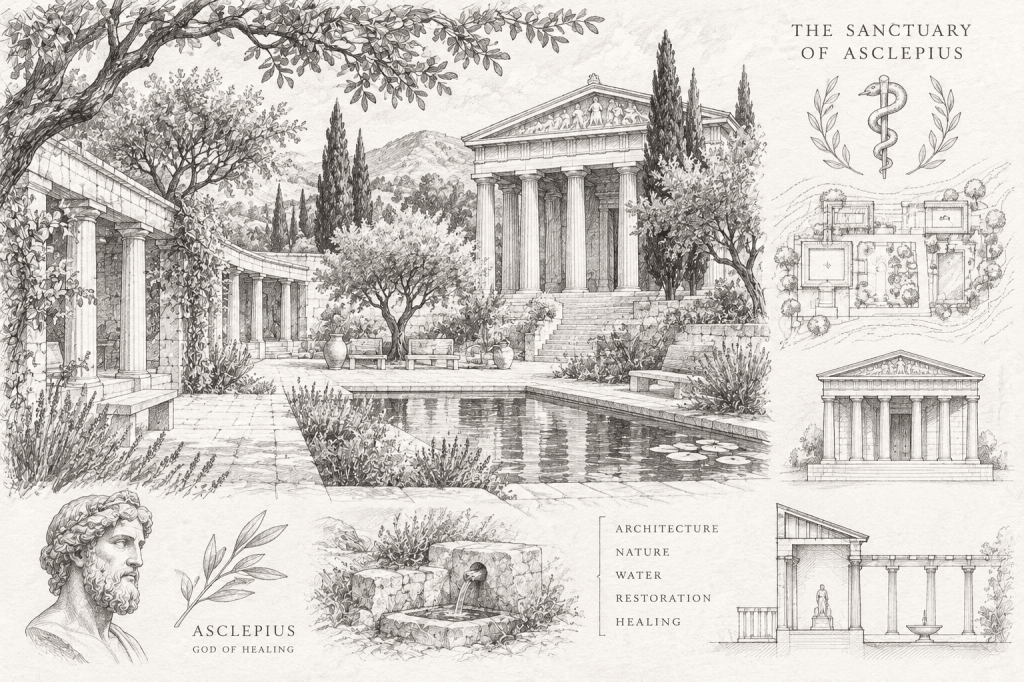
In ancient Greece, healing sanctuaries dedicated to Asclepius were often situated within peaceful natural landscapes. Architecture, gardens, bathing, rest and religious rituals formed part of the experience of healing.
The Romans developed sophisticated bathing complexes that brought together water, exercise, social interaction and architectural beauty.

Across the Middle East, traditional gardens and courtyard houses provided sheltered environments in which shade, water, vegetation and architecture moderated the intensity of the surrounding climate.
In Japan, traditions of bathing, contemplation and garden design established intimate relationships between architecture, nature and personal wellbeing.
These different architectural traditions reveal a shared understanding.
Our surroundings influence our experience of life.
Long before contemporary research began exploring the relationship between buildings and health, architecture was already being used to create environments that supported comfort, restoration and human connection.
The Renaissance Garden and the Art of Living Well
During the Renaissance, the villa became an architectural expression of the relationship between intellectual life, physical wellbeing and the natural world.
Italian country villas offered a retreat from the activity of the city, providing opportunities for contemplation, gardening, reading, conversation and enjoyment of the landscape.
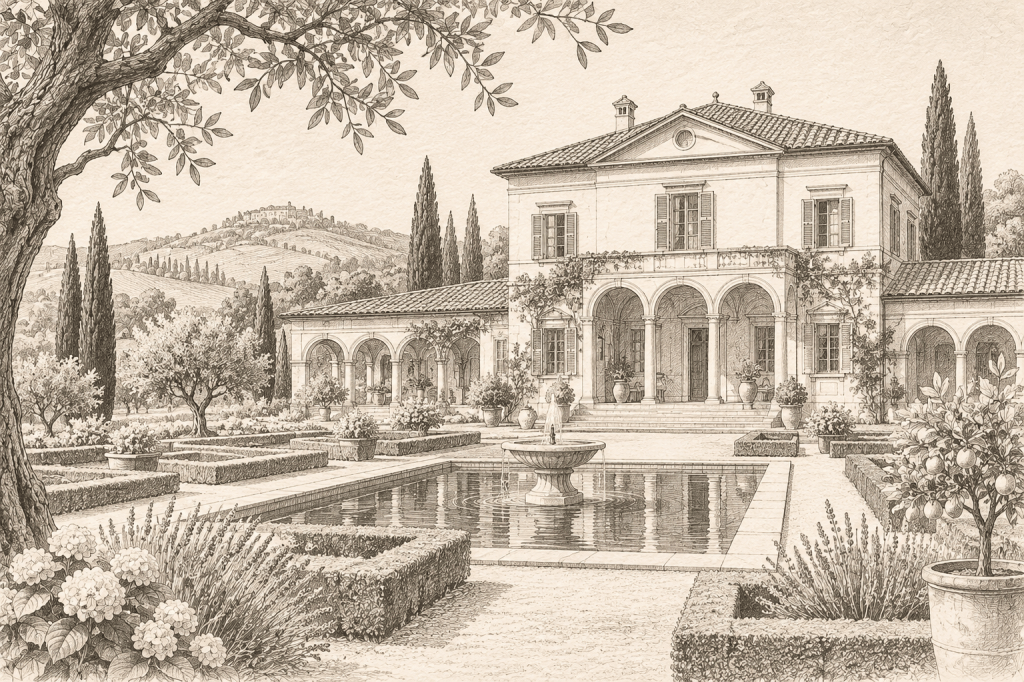
Loggias, terraces, fountains and beautifully proportioned gardens created a continuous relationship between architecture and nature.
The villa was conceived not simply as a residence, but as a setting for a particular way of living.
The surrounding landscape became an extension of the architectural experience.
These principles remain particularly relevant today.
A contemporary home can offer many of the same pleasures: a sheltered place to read, a garden in which to walk, a terrace for gathering with friends and a peaceful environment in which to restore ourselves.
The art of living well has always been closely connected to the art of creating beautiful places.
The Modern Movement and Healthy Architecture
During the nineteenth and early twentieth centuries, growing awareness of public health transformed architectural thinking.
Access to sunlight, fresh air, sanitation and outdoor space became increasingly important considerations in the design of homes, hospitals and cities.
Modern architecture explored new ways of introducing daylight and ventilation into buildings.
At the Paimio Sanatorium in Finland, completed in 1933, Alvar Aalto approached architecture as an integral part of the experience of patient care.
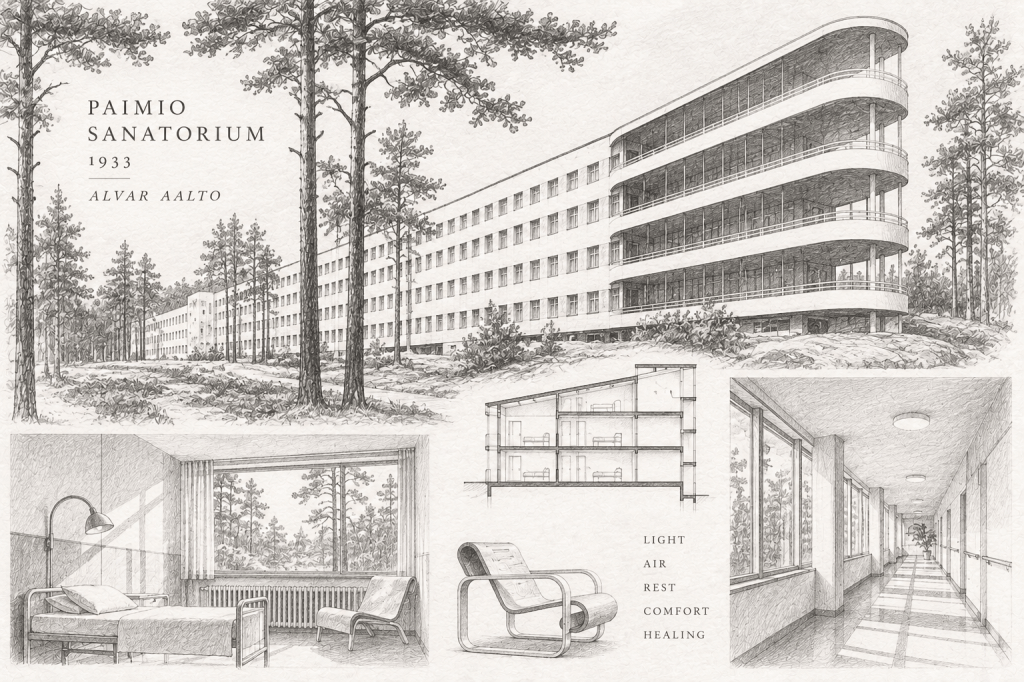
The orientation of rooms, the colors of interior surfaces, the design of furniture and the provision of outdoor terraces were considered in relation to the comfort of patients.
Aalto’s work demonstrated that architecture could respond to the human experience at an extraordinarily intimate scale.
His sensitivity to materials, light, acoustics and the natural landscape remains a beautiful source of inspiration for contemporary residential design.
It reminds us that architectural innovation is most meaningful when it improves the experience of the people who inhabit a building.
Understanding Biophilic Architecture
Biophilic design explores the relationship between human beings, nature and the built environment.
The term biophilia describes our affinity with the natural world, an idea that has become increasingly influential in contemporary architecture.
Access to daylight, views of vegetation, natural materials, water, fresh air and outdoor spaces can contribute to environments that feel more comfortable and restorative.
However, biophilic architecture is about much more than introducing plants into an interior.
It involves understanding how a building can maintain a meaningful relationship with the natural systems and landscapes surrounding it.
A window that frames the changing seasons.
A courtyard that brings sunlight into the center of a home.
A timber ceiling that introduces the warmth and texture of the natural world.
A sheltered terrace that allows us to experience the outdoors throughout much of the year.
These architectural gestures can create a continuous awareness of nature within everyday life.
The most beautiful biophilic architecture does not feel like nature has been added to a building.
It feels as though the building has emerged from a thoughtful relationship with nature itself.
The Healing Qualities of Natural Light
Natural light is one of the most important elements in the architecture of wellbeing.
It influences our perception of space, our experience of time and the biological rhythms that help regulate sleep and wakefulness.
A home that receives beautiful morning light can establish a gentle beginning to the day.
A living room illuminated by changing sunlight can maintain a connection with the passing hours.
A softly lit evening interior can support the transition toward rest.
The orientation of a building, the placement of its windows, the depth of its rooms and the character of its surrounding landscape all influence the quality of daylight within it.
The objective is not simply to introduce as much light as possible.
Excessive glare, overheating and uncomfortable contrasts can diminish the experience of a space.
Thoughtful architectural design considers the balance between illumination, shade, reflection and visual comfort.
Clerestory windows, courtyards, recessed openings, roof overhangs and external screens can all contribute to a beautifully moderated interior environment.
Light becomes a material through which architecture supports the rhythms of everyday life.
Architecture and Our Natural Rhythms
For much of human history, daily life was closely connected to the movement of the sun.
Morning light marked the beginning of activity, while the gradual arrival of darkness encouraged rest.
Contemporary life has introduced a considerable degree of separation from these natural rhythms.
Artificial lighting, digital devices and extended working hours can make the distinction between day and night less apparent.
Architecture offers an opportunity to restore some of this connection.
Bedrooms can be oriented to benefit from morning light where appropriate. Living spaces can respond to the changing position of the sun. Evening lighting can be designed to create a softer, more intimate atmosphere.
Adjustable lighting, effective bedroom shading and thoughtfully considered window treatments can allow inhabitants to respond to their individual needs.
A home can gently accompany the natural progression of the day.
Rather than maintaining the same atmosphere from morning until night, its spaces can change in character as the light changes around them.
There is something particularly beautiful about architecture that allows us to remain aware of time through the natural world.
The Importance of Fresh Air
The quality of the air within a building is fundamental to human wellbeing.
Yet it is one of the least visible aspects of architectural design.
Thoughtful ventilation, appropriate material selection, effective filtration and careful moisture management can contribute to healthier and more comfortable interior environments.
In California, the temperate climate offers wonderful opportunities for natural ventilation when outdoor conditions are suitable.
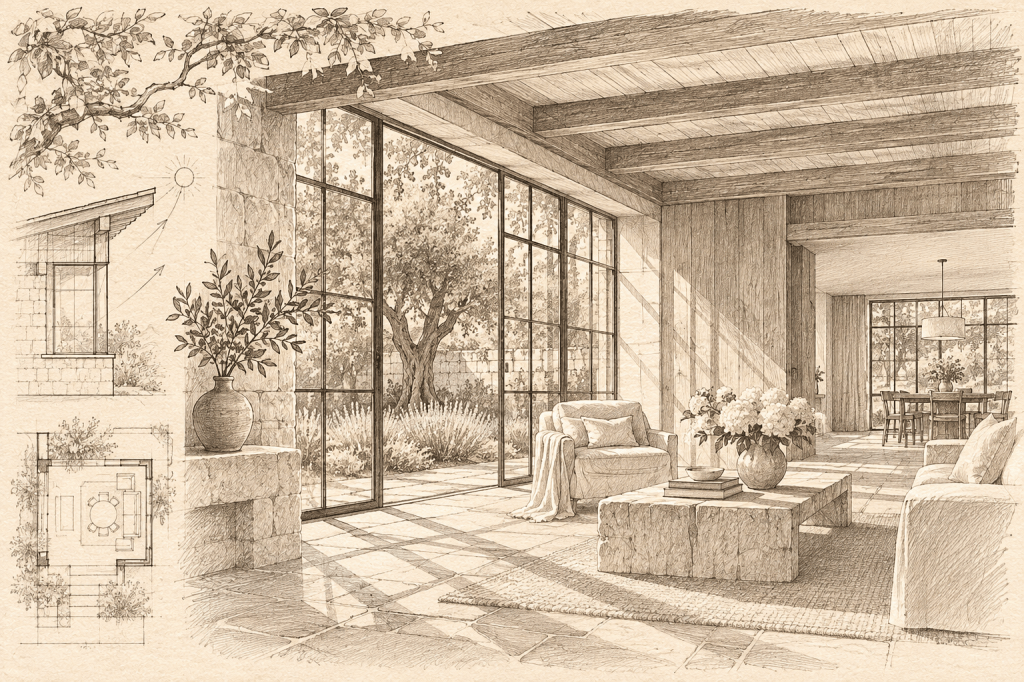
Operable windows, sheltered courtyards and carefully positioned openings can allow gentle breezes to move through a home.
The experience of opening a window to the fragrance of a garden or the freshness of the morning air is one of the simple pleasures of residential architecture.
However, contemporary buildings must also respond to outdoor air pollution, wildfire smoke, seasonal allergens and changing climatic conditions.
Well-designed mechanical ventilation and filtration systems can complement natural ventilation, allowing the home to maintain comfortable indoor conditions when windows need to remain closed.
The most successful architecture brings together the pleasures of natural ventilation and the benefits of contemporary building technology.
Fresh, comfortable indoor air should be a fundamental quality of every thoughtfully designed home.
The Restorative Power of Landscape
The experience of nature can offer a welcome contrast to the intensity of contemporary life.
A garden provides opportunities to observe the changing seasons, experience sunlight, listen to birdsong and enjoy the simple pleasure of being outdoors.
Even a modest garden can become a deeply meaningful part of a home.
A beautifully framed tree, a small courtyard, a planted terrace or a window overlooking a natural landscape can establish a sense of connection beyond the walls of a building.
In larger residential properties and country estates, the landscape can offer a variety of restorative experiences.
A woodland pathway may encourage quiet walking. An orchard may provide a connection with seasonal rhythms. A sheltered garden may become a place for reading or contemplation.
The landscape can support both activity and stillness.
Architecture and landscape should therefore be conceived together rather than as separate disciplines.
The placement of buildings, windows, terraces and pathways can establish relationships with nature that become part of the everyday experience of the home.
A beautiful landscape is not simply something to look at.
It is something to inhabit.
The Garden as a Place of Healing
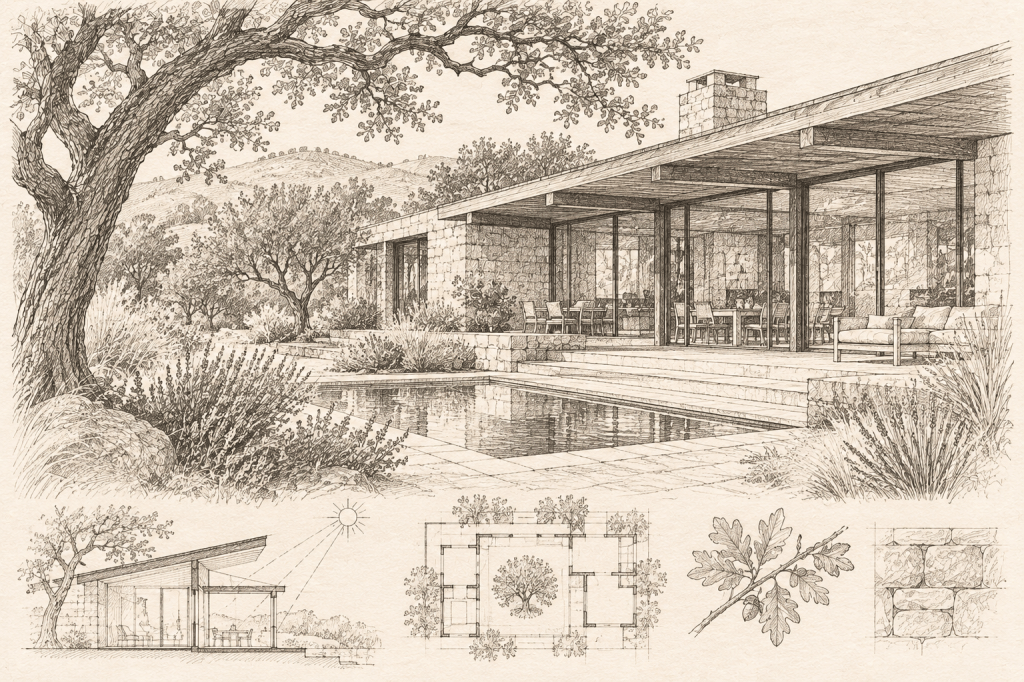
Throughout history, gardens have been associated with restoration, contemplation and renewal.
The enclosed gardens of medieval monasteries, the contemplative gardens of Japan and the sheltered courtyards of Mediterranean architecture each offer different interpretations of this relationship.
Their beauty often lies in their ability to engage the senses gently.
The fragrance of herbs.
The sound of moving water.
The texture of stone beneath our feet.
The delicate movement of leaves in the wind.
A contemporary residential garden can offer many of these same experiences.
A quiet seating area beneath a tree, a small reflecting pool or a beautifully planted pathway can create opportunities for moments of restoration throughout the day.
The garden need not be elaborate.
Its value lies in the quality of the relationship it establishes between people and the natural world.
Sometimes, the most meaningful architectural intervention is simply creating a beautiful place in which to sit outside.
The Courtyard as a Private World
Few architectural spaces bring together the qualities of wellbeing as naturally as the courtyard.
A courtyard can introduce daylight, fresh air, planting, water and a sense of privacy into the heart of a residence.
Its surrounding architecture creates a feeling of enclosure while maintaining an intimate connection with the sky and the changing qualities of the natural environment.
Rooms opening onto a courtyard can enjoy views of greenery throughout the day.
A mature olive tree may provide shade and sculptural beauty. A small fountain may introduce the gentle sound of water. A sheltered terrace may become a place for morning coffee or quiet conversation.
The courtyard can accommodate social life while also offering opportunities for solitude.
In California, where the relationship between indoor and outdoor living is particularly important, the courtyard offers a wonderful architectural response to the desire for comfort, intimacy and connection with nature.
It becomes a small landscape of our own, woven into the daily experience of the home.
Natural Materials and Sensory Wellbeing
Natural materials introduce a particular richness into the architectural experience.
The warmth of timber, the texture of limestone, the softness of linen and the subtle variations of lime plaster engage our senses in ways that highly uniform surfaces often cannot.
These materials can establish a connection with the natural world even when we are indoors.
Their individual characteristics bring depth and warmth to architectural spaces.
A timber handrail becomes familiar through touch. A stone floor responds to changing temperatures and light. A plaster wall reveals the delicate movement of shadows throughout the day.
The selection of materials also has practical implications for wellbeing.
Low-emitting finishes, carefully selected adhesives and coatings, appropriate moisture management and durable construction can contribute to indoor environmental quality.
Natural materials should be evaluated for their actual performance rather than assumed to be inherently healthier.
Their greatest architectural value emerges when sensory beauty, environmental responsibility and technical understanding are brought together.
A home can become a place in which the simple experience of touching and inhabiting its materials brings everyday pleasure.
The Architecture of Thermal Comfort
Our sense of wellbeing is closely connected to how comfortable we feel within our surroundings.
A room that is excessively hot, cold or drafty can make even the most beautiful architecture difficult to enjoy.
Thermal comfort deserves consideration from the earliest stages of architectural design.
Building orientation, insulation, glazing, shading, air movement and the temperature of surrounding surfaces all contribute to our experience of an interior.
In California, deep roof overhangs, carefully designed external shading and sheltered outdoor spaces can help moderate the intensity of summer sunlight.
Well-insulated building envelopes and high-performance windows can support comfortable conditions throughout the year.
Thoughtfully designed heating and cooling systems can complement these passive architectural strategies.
The objective is to create environments that feel naturally comfortable without unnecessary dependence on energy-intensive systems.
When architecture responds intelligently to its climate, comfort becomes an inherent quality of the building rather than something continually imposed upon it.
The Luxury of Silence
Sound has an extraordinary influence on our experience of architecture.
The gentle sound of rain, birdsong or moving water can enrich a place, while persistent unwanted noise can interfere with concentration, relaxation and sleep.
Acoustic comfort is therefore an essential component of architectural wellbeing.
The arrangement of rooms, the location of mechanical equipment, the construction of walls and floors and the selection of interior materials all influence the acoustic character of a home.
Bedrooms and studies can be positioned away from more active household spaces.
Libraries, closets and circulation areas can provide useful acoustic buffers.
Natural textiles, carefully designed ceilings and appropriate acoustic treatments can help moderate reverberation within larger rooms.
These considerations become particularly important in contemporary homes with expansive glazing, open floor plans and hard architectural surfaces.
A beautifully designed home should allow conversation to feel comfortable, music to be enjoyed and quiet moments to remain undisturbed.
Silence is not the absence of architectural experience.
It is one of its most beautiful qualities.
Proportion, Order and the Feeling of Calm
The proportions of a room can influence the way we experience it.
A beautifully balanced space may feel generous without being overwhelming, intimate without being restrictive and ordered without appearing rigid.
Throughout architectural history, designers have explored the relationship between geometry, proportion and human scale.
The classical traditions of Greece and Rome, Renaissance architecture and the refined simplicity of Japanese interiors each offer different expressions of spatial harmony.
Contemporary architecture can draw upon these principles without reproducing historic styles.
The relationship between ceiling height and room dimensions, the rhythm of windows, the arrangement of structural elements and the balance between solid surfaces and openings can contribute to a sense of visual coherence.
A well-composed interior does not require constant visual stimulation to remain interesting.
Its beauty can emerge gradually through light, materiality and the changing experience of inhabiting it.
There is a quiet reassurance in architecture that feels beautifully resolved.
The Importance of Refuge and Prospect
One of the most interesting ideas in environmental design is the relationship between refuge and prospect.
Prospect describes the opportunity to look outward and experience the surrounding landscape.
Refuge describes the feeling of being sheltered and protected.
Architecture can bring these qualities together in particularly beautiful ways.
A window seat within a deep architectural recess may provide a sheltered place from which to enjoy an expansive view.
A covered terrace may offer protection from the sun while overlooking a distant valley.
A bedroom may feel intimate and enclosed while opening toward a secluded garden.
These relationships help explain why certain architectural spaces feel particularly comfortable.
We can experience the openness of the world without feeling unnecessarily exposed to it.
The balance between shelter and openness is especially meaningful in residential architecture.
A home should allow us to feel connected to our surroundings while preserving the comforting sense of having a place of our own.
Privacy and the Freedom to Retreat
Wellbeing requires opportunities for both connection and solitude.
A home should provide places where family and friends can gather, but also spaces where individuals can withdraw from the activity of the household.
A private library, a reading alcove, a secluded garden or a quiet bedroom can offer moments of restoration.
These spaces need not be large or elaborate.
Their success may depend upon a beautiful view, comfortable proportions, soft illumination and a thoughtful degree of acoustic separation.
Privacy allows us to determine when and how we engage with others.
It supports independence without requiring isolation.
In an increasingly connected world, the opportunity to spend time undisturbed can possess extraordinary value.
Architecture can provide this freedom through the careful organization of space.
The Bedroom as a Sanctuary for Rest
The bedroom occupies a particularly important place in the architecture of wellbeing.
It is where we begin and end our days and where the body and mind have an opportunity to rest.
Its orientation, acoustic character, temperature, ventilation and relationship with natural light all deserve careful consideration.
A private garden may offer a peaceful view upon waking.
Thoughtfully designed window treatments can provide darkness when needed.
Natural materials, comfortable textures and restrained lighting can establish an atmosphere of tranquility.
The location of the bedroom within the home is equally important.
Separation from busy circulation routes, entertainment spaces and noisy building services can help create a more restful environment.
A beautifully designed bedroom should offer more than visual elegance.
It should provide the conditions in which its inhabitants can feel genuinely comfortable, sheltered and at ease.
The Architecture of Bathing and Renewal
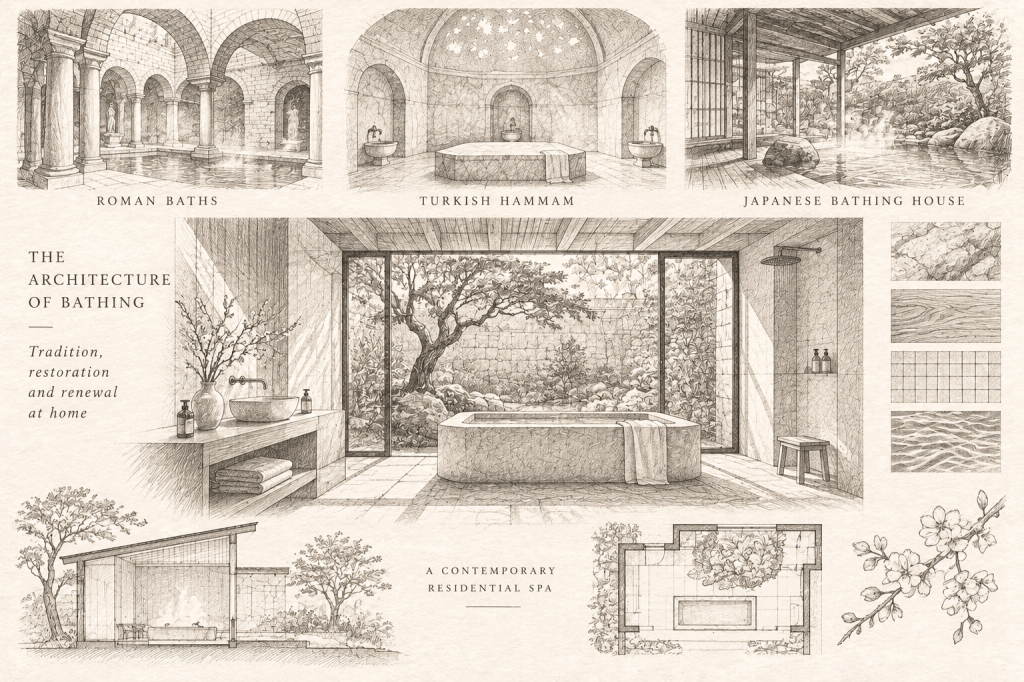
Water has long occupied a meaningful place in architectural traditions associated with wellbeing.
Roman baths, Turkish hammams, Japanese bathing houses and contemporary spas each explore different relationships between water, temperature, materiality and the human experience.
Residential architecture offers wonderful opportunities to reinterpret these traditions at a more intimate scale.
A beautifully proportioned bathroom may open onto a private garden.
A natural stone bathtub may be positioned to capture soft morning light.
A sheltered outdoor shower may introduce a direct connection with the changing qualities of nature.
A sauna or steam room may become part of a thoughtfully designed wellness pavilion, with appropriate attention to ventilation, moisture, safety and maintenance.
These spaces can transform ordinary daily rituals into moments of quiet enjoyment.
Their beauty need not depend upon extravagance.
The thoughtful combination of water, light, natural materials and privacy can create an extraordinary sense of tranquility.
Architecture That Encourages Movement
Physical activity need not be confined to a gym or dedicated exercise room.
The architecture of a home and its landscape can gently encourage movement throughout the day.
A beautiful garden pathway may invite a morning walk.
A staircase illuminated by natural light may become a pleasure to use.
A sheltered terrace may provide a place for stretching or exercise.
A swimming pool may become part of the everyday experience of outdoor living.
In larger country estates, walking trails, orchards, gardens and recreational spaces can be integrated into the landscape.
These opportunities should be accessible and responsive to the different abilities and preferences of the people who inhabit the property.
Movement becomes a natural part of life rather than something separated from it.
Architecture can make healthy everyday activities more inviting simply by providing beautiful environments in which they can occur.
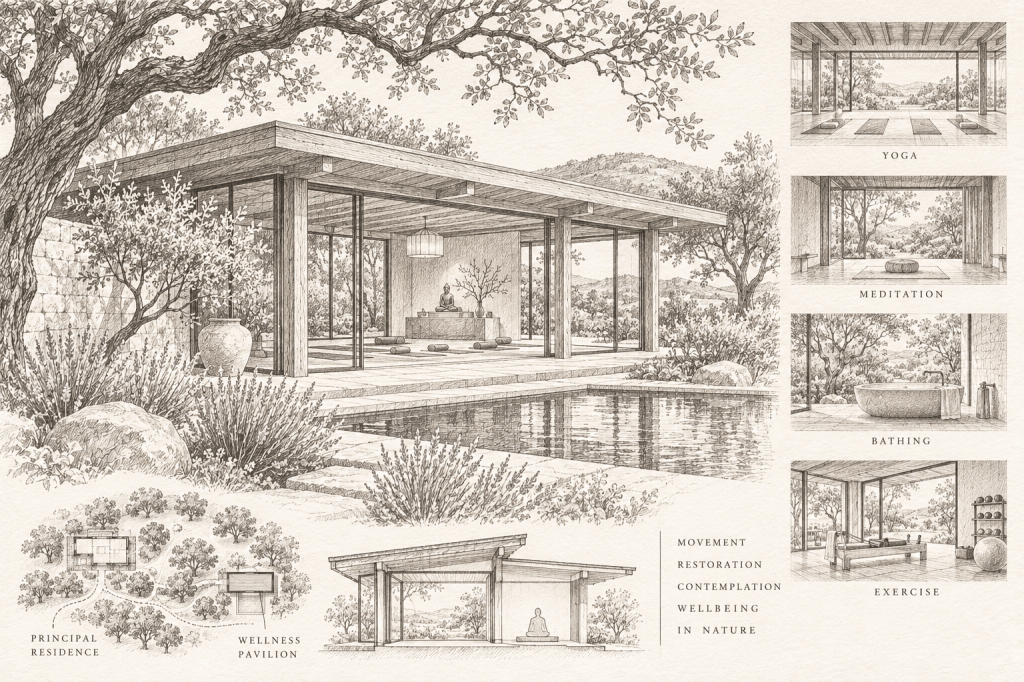
The Contemporary Wellness Pavilion
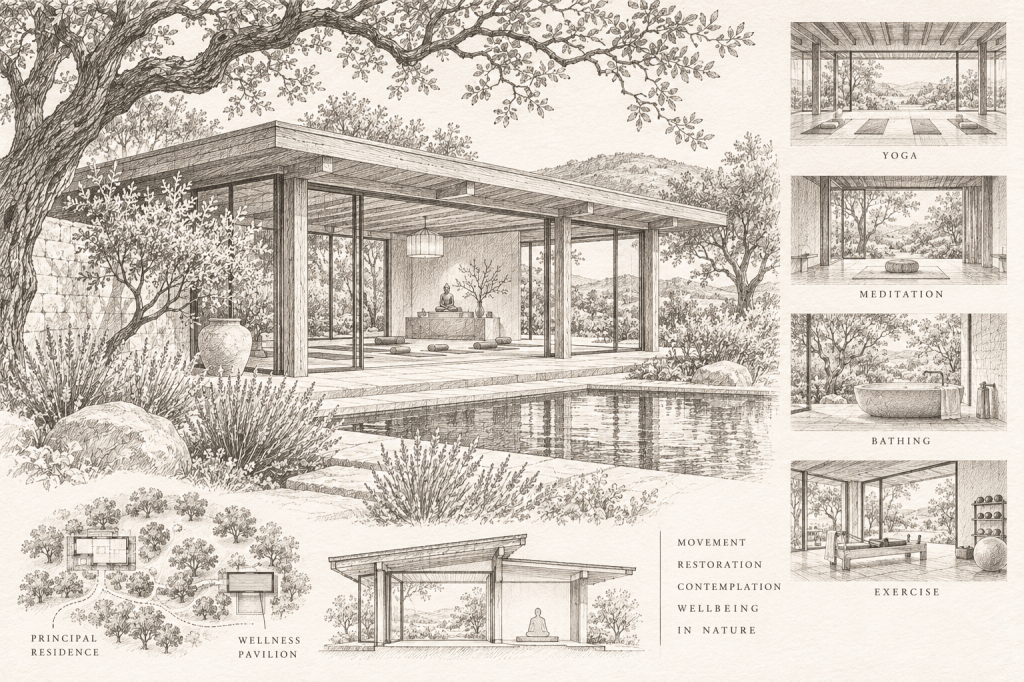
The wellness pavilion offers a particularly interesting opportunity within the design of contemporary country estates.
Rather than locating every activity within the principal residence, a separate pavilion can establish a more intimate relationship between wellbeing and the landscape.
It may accommodate a space for yoga, meditation, exercise, bathing or quiet contemplation.
Expansive openings can frame carefully selected views, while sheltered terraces provide opportunities to move between interior and exterior spaces.
Natural materials, comfortable acoustics and softly filtered daylight can contribute to an atmosphere of calm.
The journey from the principal residence to the pavilion can itself become part of the experience.
A quiet walk through an orchard or garden creates a gentle transition from the activity of everyday life to a place dedicated to personal wellbeing.
The most beautiful wellness spaces do not need to feel clinical or overtly luxurious.
They can possess the simplicity and intimacy of a beautifully crafted garden building.
The Kitchen and the Ritual of Nourishment
The kitchen is one of the most important spaces in the architecture of everyday wellbeing.
It is a place of nourishment, creativity, conversation and shared rituals.
A beautifully designed kitchen can encourage the enjoyment of preparing food and spending time together.
Natural daylight, comfortable working surfaces, intuitive organization and views toward the garden can enrich the experience of cooking.
A connection with a kitchen garden, orchard or outdoor dining terrace can establish a more immediate relationship between food and the landscape.
The preparation of a meal becomes part of a wider architectural experience.
The kitchen can also provide opportunities for different kinds of social interaction.
A generous island may encourage informal conversation, while a smaller breakfast alcove offers a quieter place to begin the day.
Thoughtful ventilation, comfortable ergonomics and practical storage contribute equally to the quality of the space.
A beautiful kitchen is not simply a collection of refined materials and appliances.
It is an environment that supports the pleasures of everyday life.
The Architecture of Human Connection
While solitude is important to wellbeing, so too is our relationship with other people.
Architecture can create opportunities for meaningful human connection.
A generous dining table, a comfortable living room, a sheltered outdoor fireplace or a shared garden can become settings for conversation, celebration and everyday companionship.
The arrangement of these spaces influences the way people gather.
Seating positioned to encourage conversation, comfortable acoustics and thoughtful relationships between rooms can make social interaction feel more natural.
Outdoor spaces can offer particularly beautiful opportunities for gathering.
A long table beneath a pergola, a terrace overlooking the landscape or a courtyard sheltered from the wind can become some of the most cherished places within a home.
Architecture cannot create relationships for us.
But it can provide beautiful and welcoming settings in which relationships can flourish.
Designing for Different Sensory Needs
Every individual experiences the built environment differently.
Some people find expansive, light-filled spaces energizing. Others feel more comfortable in intimate rooms with softer illumination.
Some enjoy the activity of shared environments, while others are particularly sensitive to noise, glare, visual complexity or unexpected stimulation.
Thoughtful architecture recognizes this diversity.
Adjustable lighting, comfortable acoustics, intuitive circulation and opportunities for privacy can allow people to adapt their surroundings to their individual needs.
Predictable spatial arrangements and clearly defined transitions between rooms can contribute to a sense of familiarity and comfort.
A home can provide a range of environments rather than imposing a single sensory experience upon everyone.
These principles are particularly relevant to neuroinclusive architecture, which considers the varied ways in which people perceive and respond to their surroundings.
The objective is not to create a universally identical experience.
It is to create beautiful places that offer individuals the freedom to find their own comfort within them.
Architecture becomes an expression of empathy.
The Architecture of Everyday Rituals
Much of the pleasure of living in a beautiful home emerges through small, familiar rituals.
Opening the curtains in the morning.
Preparing coffee beside a sunlit window.
Walking through the garden.
Reading beside the fireplace.
Enjoying dinner outdoors as the evening light fades.
These moments may appear ordinary, yet they form a considerable part of our experience of life.
Architecture can enrich them through thoughtful design.
A beautifully positioned breakfast terrace may become a favorite place to begin the day.
A window seat may encourage a few moments of reading.
A sheltered entrance may make returning home feel particularly welcoming.
The architect’s role is not simply to create impressive spaces for exceptional occasions.
It is also to consider the quiet beauty of the things we do every day.
Perhaps the greatest architectural luxury is the transformation of ordinary moments into extraordinary pleasures.
The Beauty of Simplicity
Contemporary life often surrounds us with considerable visual and sensory complexity.
Architecture can offer a welcome sense of clarity.
A restrained palette of natural materials, beautifully proportioned rooms and thoughtfully integrated storage can create environments that feel ordered without appearing impersonal.
Simplicity allows the inherent qualities of architecture to become more expressive.
The texture of a stone wall.
The grain of an oak ceiling.
The changing pattern of sunlight across a floor.
The silhouette of a tree beyond a window.
These elements can provide richness without unnecessary ornamentation.
However, simplicity should not be confused with emptiness.
A home should accommodate the personal objects, memories and everyday activities that give it character.
The most beautiful interiors often establish a quiet architectural framework within which the individuality of their inhabitants can unfold.
Simplicity becomes a form of generosity, allowing space for life itself.
Designing for Wellbeing Throughout Life
A thoughtfully designed home can support its inhabitants through many different stages of life.
The needs of young children, adults, older family members and people with changing physical abilities may differ considerably.
Architecture can anticipate these transitions with sensitivity.
Step-free entrances, comfortable circulation, intuitive layouts and adaptable bathrooms can provide greater independence over time.
A principal bedroom suite on the main living level can offer flexibility as circumstances change.
Accessible gardens and sheltered outdoor seating can allow people to continue enjoying nature throughout their lives.
These qualities need not diminish the architectural elegance of a home.
They can be integrated beautifully into its fundamental composition.
The principles of universal design encourage us to consider the widest possible range of human experiences.
Architecture that supports independence, dignity and comfort throughout life possesses a particularly enduring value.
It is an investment in the future wellbeing of the people who inhabit it.
Multigenerational Wellbeing
The contemporary family home increasingly accommodates different generations, changing household arrangements and evolving patterns of work and life.
Architecture can support these relationships by balancing companionship with independence.
A guest cottage, an independent suite or a secondary residence can provide personal space while maintaining a connection with the wider household.
Shared gardens, dining terraces and gathering rooms can encourage spontaneous interaction.
Private entrances, acoustic separation and secluded outdoor areas can allow individuals to maintain their own routines.
In the design of country estates, these relationships can become part of a larger architectural and landscape composition.
A collection of buildings may accommodate several generations while preserving the intimacy of each individual home.
The architecture provides opportunities for connection without making it obligatory.
It recognizes that wellbeing often depends upon the freedom to balance family life with personal independence.
A Healthy Home and a Healthy Environment
Human wellbeing and environmental responsibility are closely connected.
The quality of the air we breathe, the water we use and the landscapes we inhabit cannot be separated entirely from the health of the wider natural world.
Architecture can contribute to both through thoughtful material selection, energy efficiency, water conservation and responsible landscape design.
High-performance building envelopes can improve thermal comfort while reducing energy demand.
Effective ventilation and filtration can support indoor air quality.
Climate-appropriate planting can reduce irrigation requirements while providing habitat for native wildlife.
Durable, repairable materials can reduce the environmental consequences of frequent replacement.
In California, wildfire resilience, seismic safety, drought and changing climatic conditions must also form part of this understanding.
A healthy home should offer a comfortable and protective environment while responding responsibly to the natural systems upon which it depends.
Wellbeing becomes not simply an individual aspiration, but a broader architectural responsibility.
The Architecture of Wellbeing in California
California offers extraordinary opportunities to explore the relationship between architecture, landscape and human wellbeing.
The wooded hillsides of Marin, the vineyards and orchards of Napa and Sonoma, the coastal valleys and the changing atmosphere of the Pacific coastline each offer distinctive architectural possibilities.
A residence beneath mature oak trees may provide a wonderful sense of shelter and connection with nature.
A Wine Country estate may incorporate walking trails, productive gardens, outdoor gathering spaces and a secluded wellness pavilion.
A coastal home may frame the movement of the ocean and the changing qualities of fog and sunlight.
California’s climate encourages a particularly intimate relationship between interior and exterior living, while its environmental challenges invite thoughtful approaches to resilience and comfort.
The most beautiful homes emerge from an understanding of these conditions.
They allow their inhabitants to experience the landscape not simply as a distant view, but as an integral part of everyday life.
Wellbeing as the New Expression of Luxury
For much of architectural history, luxury has been associated with grandeur, rarity and material abundance.
Today, another understanding of luxury is becoming increasingly meaningful.
The luxury of uninterrupted sleep.
The pleasure of fresh morning air.
The freedom to spend time in nature.
The comfort of a beautifully quiet room.
The opportunity to gather with family and friends in a welcoming environment.
The reassurance of living in a home that supports our changing needs.
These qualities possess a value that extends far beyond appearance.
They emerge from thoughtful architectural planning, craftsmanship, environmental intelligence and an understanding of the human experience.
A modest, beautifully proportioned room overlooking a garden may offer more genuine pleasure than an enormous space without intimacy or connection to nature.
Perhaps the most enduring expression of luxury is architecture that allows us to live well.
Designing for Wellbeing at Orla Studios
At Orla Studios, we believe that the experience of inhabiting architecture is as important as its visual beauty.
From the earliest stages of a project, we explore the relationship between the site, the natural landscape, the movement of sunlight and the individual needs of the people who will inhabit the home.
We consider how architecture can encourage connection with nature, support comfortable daily rhythms and provide opportunities for both companionship and solitude.
We explore the qualities of natural materials, the proportions of rooms, the acoustic character of interiors and the relationship between indoor and outdoor living.
We are interested in homes that feel generous without being overwhelming, refined without being formal and peaceful without being disconnected from life.
Our approach brings together architectural beauty, environmental responsibility, technical expertise and sensitivity to the human experience.
Whether designing a contemporary residence, transforming an existing home or creating a country estate, our ambition is to create environments that enrich the lives of their inhabitants.
Places that offer comfort, inspiration, tranquility and a meaningful sense of belonging.
Architecture that feels as beautiful to live in as it is to look at.
The Quiet Generosity of Beautiful Architecture
Perhaps the most beautiful qualities of architecture are those we gradually come to take for granted.
The morning sunlight that enters the kitchen.
The quietness of a bedroom at night.
The comfort of a sheltered terrace.
The familiar view of a tree changing with the seasons.
The pleasure of gathering around a table with the people we love.
These experiences become woven into the fabric of our lives.
They may never appear extraordinary in isolation, yet together they can contribute profoundly to our sense of wellbeing.
Architecture cannot resolve every difficulty in life, nor can it guarantee happiness or health.
But it can create environments that support us.
It can provide places in which we feel comfortable, connected, inspired and restored.
It can offer a sense of refuge from the intensity of the outside world and a beautiful setting in which the ordinary pleasures of life can unfold.
Perhaps this is the quiet generosity of truly thoughtful architecture.
It does not simply ask to be admired.
It gives something back to the people who inhabit it.
And perhaps the greatest achievement of a beautiful home is that, within it, we are able to live a little more beautifully ourselves.
Orla Studios Architects
Exploring the relationship between architecture, nature, craftsmanship and the art of living well.


