Maximalist interiors work differently. They are rooms with a pulse: layered, colorful, and full of the things their owners care about. Maximalism has become one of newest movements in home design because it treats a home as a portrait of the people who live there.
What maximalist design is
Maximalism is a philosophy of abundance. It embraces rich color, mixed patterns, dense collections, and the belief that a room should feel full of life rather than emptied of it. Where minimalism asks “what can I remove?”, maximalism asks “what else do I love?”
That question is what separates a maximalist room from a cluttered one. The best maximalist spaces are curated with care. Colors echo across the room, favorite pieces get their moment, and the whole thing hangs together with rhythm and intention. It is a lot, but it’s a lot on purpose.
A tradition worth celebrating
Maximalism has deep roots. Baroque and Rococo interiors covered walls and ceilings in gilding, paint, and ornament. Victorian parlors were filled with curios, textiles, and treasures from around the world. Mughal palaces glowed with inlaid stone and jewel-toned color. For much of history, a richly layered home was simply what a beautiful home looked like.
The twentieth century brought the modernist mantra “less is more,” and minimalism ruled for decades. But designers kept the maximalist spirit alive. In 1966, architect Robert Venturi answered modernism with a cheerful “less is a bore.” In 1980, Ettore Sottsass and the Memphis Group in Milan began producing furniture in bold colors, playful shapes, and wild laminates that made rooms feel like celebrations. That energy never really went away, and today it is back in full color.
Why it’s flourishing now
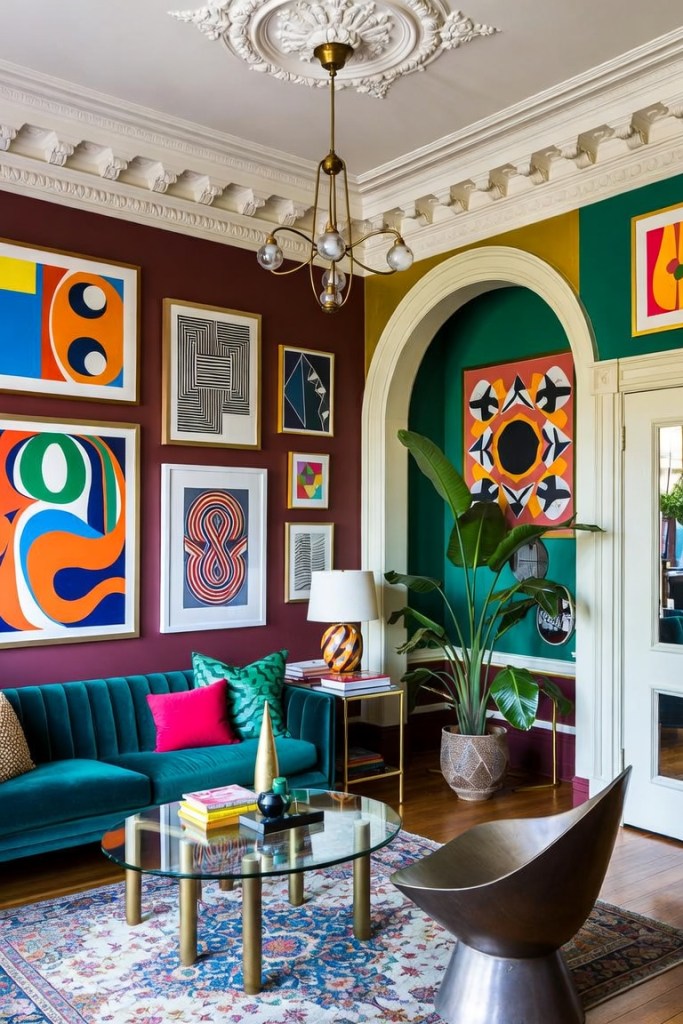
Homes now do a great deal. They are offices, gyms, cinemas, and gathering places, and many people want spaces that lift their mood in return. Designers have picked up on this with ideas like “dopamine decor,” which is the simple notion that surrounding yourself with colors and objects you love makes you feel good. A vivid green wall, a gallery wall of mismatched frames, or a velvet sofa in deep magenta can change how a room feels every time you walk in.
There is also a real appetite for individuality. In a world of matching showrooms and identical rental apartments, a maximalist home says someone specific lives here. It is a way to make a space unmistakably your own.
Personality, story, and sustainability
The most rewarding maximalist homes are built slowly, and that makes them naturally sustainable. A grandmother’s vase, a flea-market armchair, a rug from a trip, and a vintage lamp rescued from a thrift store all find a place because maximalism values character and history over uniform newness. Nothing has to match, so almost anything can belong. Each piece carries a story, and together they make a home that feels lived in and loved, and that is hard to replicate by ordering a room in one afternoon.
Room by room: bringing maximalism home
Living rooms are the natural stage. Try a bold sofa, layered rugs, a gallery wall, and a mix of lamp light at different heights for warmth.
Bedrooms can be cocoons of color: a saturated wall, patterned bedding layered with textures, and art hung right up to the ceiling.
Kitchens and dining rooms welcome open shelves of colorful dishes, patterned tile, and statement lighting, since they’re already places for abundance.
Bathrooms and small spaces are perfect for experimenting. A dramatic wallpaper or a jewel-toned paint color in a powder room is a low-risk way to start.
Principles for doing it well
- Choose a thread. A recurring color, motif, or material lets very different pieces feel related.
- Vary the scale. Mix bold statement pieces with small, intricate details so the eye has places to land and places to explore.
- Layer texture. Velvet, linen, wood, brass, and ceramic add depth that flat color can’t.
- Start with what you love. Build outward from a favorite painting, rug, or heirloom instead of a trend.
- Give it time. The most beautiful maximalist rooms feel collected over years, and that’s part of the pleasure.
- Leave a little breathing room. A calm surface or two makes the richness around it feel deliberate.
The takeaway
Maximalism invites you to stop worrying about whether your home looks “correct” and start asking whether it feels like you. It rewards curiosity, generosity, and a willingness to let color, pattern, and personal treasures share the same room. Minimalism suits people who find peace in emptiness, but many of us find joy in abundance. Whether you begin with one bold wallpaper or a full room of layered color, a maximalist home offers a place that feels warm, alive, and yours.
Rooms With a Pulse: The Joy of Maximalist Interior Design
Some rooms are easy to admire and hard to love. They are tidy, tasteful, and quiet, and they could belong to anyone. Maximalist interiors work the other way. They are rooms with a pulse: layered, colorful, and full of the things their owners care about. Maximalism has become one of the most exciting movements in home design because it treats a home as a portrait of the people who live there.
What maximalist design is
Maximalism is a philosophy of abundance. It embraces rich color, mixed patterns, dense collections, and the belief that a room should feel full of life rather than emptied of it. Where minimalism asks “what can I remove?”, maximalism asks “what else do I love?”
That question is what separates a maximalist room from a cluttered one. The best maximalist spaces are curated with care. Colors echo across the room, favorite pieces get their moment, and the whole thing hangs together with rhythm and intention. It is a lot, but it’s a lot on purpose.
A tradition worth celebrating
Maximalism has deep roots. Baroque and Rococo interiors covered walls and ceilings in gilding, paint, and ornament. Victorian parlors were filled with curios, textiles, and treasures from around the world. Mughal palaces glowed with inlaid stone and jewel-toned color. For much of history, a richly layered home was simply what a beautiful home looked like.
The twentieth century brought the modernist mantra “less is more,” and minimalism ruled for decades. But designers kept the maximalist spirit alive. In 1966, architect Robert Venturi answered modernism with a cheerful “less is a bore.” In 1980, Ettore Sottsass and the Memphis Group in Milan began producing furniture in bold colors, playful shapes, and wild laminates that made rooms feel like celebrations. That energy never really went away, and today it is back in full color.
Why it’s flourishing now
Homes now do a great deal. They are offices, gyms, cinemas, and gathering places, and many people want spaces that lift their mood in return. Designers have picked up on this with ideas like “dopamine decor,” which is the simple notion that surrounding yourself with colors and objects you love makes you feel good. A vivid green wall, a gallery wall of mismatched frames, or a velvet sofa in deep magenta can change how a room feels every time you walk in.
There is also a real appetite for individuality. In a world of matching showrooms and identical rental apartments, a maximalist home says someone specific lives here. It is a way to make a space unmistakably your own.
Personality, story, and sustainability
The most rewarding maximalist homes are built slowly, and that makes them naturally sustainable. A grandmother’s vase, a flea-market armchair, a rug from a trip, and a vintage lamp rescued from a thrift store all find a place because maximalism values character and history over uniform newness. Nothing has to match, so almost anything can belong. Each piece carries a story, and together they make a home that feels lived in and loved, and that is hard to replicate by ordering a room in one afternoon.
Room by room: bringing maximalism home
Living rooms are the natural stage. Try a bold sofa, layered rugs, a gallery wall, and a mix of lamp light at different heights for warmth.
Bedrooms can be cocoons of color: a saturated wall, patterned bedding layered with textures, and art hung right up to the ceiling.
Kitchens and dining rooms welcome open shelves of colorful dishes, patterned tile, and statement lighting, since they’re already places for abundance.
Bathrooms and small spaces are perfect for experimenting. A dramatic wallpaper or a jewel-toned paint color in a powder room is a low-risk way to start.
Principles for doing it well
- Choose a thread. A recurring color, motif, or material lets very different pieces feel related.
- Vary the scale. Mix bold statement pieces with small, intricate details so the eye has places to land and places to explore.
- Layer texture. Velvet, linen, wood, brass, and ceramic add depth that flat color can’t.
- Start with what you love. Build outward from a favorite painting, rug, or heirloom instead of a trend.
- Give it time. The most beautiful maximalist rooms feel collected over years, and that’s part of the pleasure.
- Leave a little breathing room. A calm surface or two makes the richness around it feel deliberate.
Maximalism invites you to stop worrying about whether your home looks “correct” and start asking whether it feels like you. It rewards curiosity, generosity, and a willingness to let color, pattern, and personal treasures share the same room. Minimalism suits people who find peace in emptiness, but many of us find joy in abundance. Whether you begin with one bold wallpaper or a full room of layered color, a maximalist home offers a place that feels warm, alive, and yours.