
Modern homes and Resorts are particularly suited to a landscape setting. Large areas of glazing, extended overhangs, long decks, indoor outdoor living opportunities. The massing hugging the contours of the site also lend to a beautiful resolution of the design challenge we are faced with when a client contacts us to design and build a project.
Designing a building in the landscape requires a careful balance between integrating the building into the natural surroundings while taking advantage of the landscape’s features. Here are some tips to consider when designing a modern home in the landscape:
Site Analysis: Begin with a thorough analysis of the landscape, considering factors like topography, orientation, views, prevailing winds, and existing vegetation. Identify any unique features that you can highlight or incorporate into the design.
Sustainable Design: Aim for an eco-friendly and sustainable design that minimizes the environmental impact. Utilize passive design principles, such as optimizing natural light, site orientation and placement of spaces, ventilation, and thermal mass to reduce energy consumption. Strive for netzero by incorporating solar, natural cooling and heating, increase insulation.
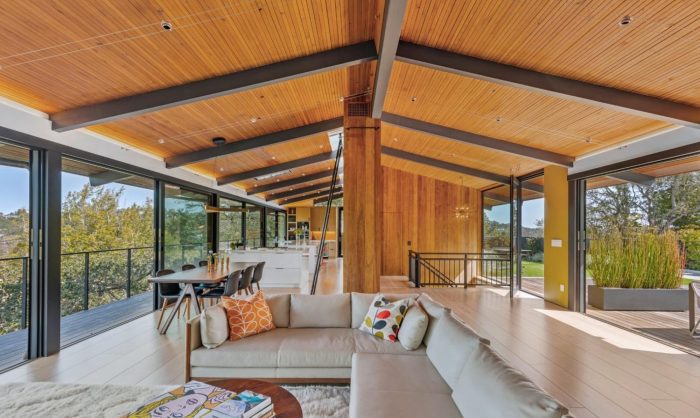
Cedar soffited overhangs provide shade :
In the northern hemisphere, large overhangs facing south shade living areas from summer heat when the sun is high in the sky overhead. Operable skylights provide cooling opportunities.
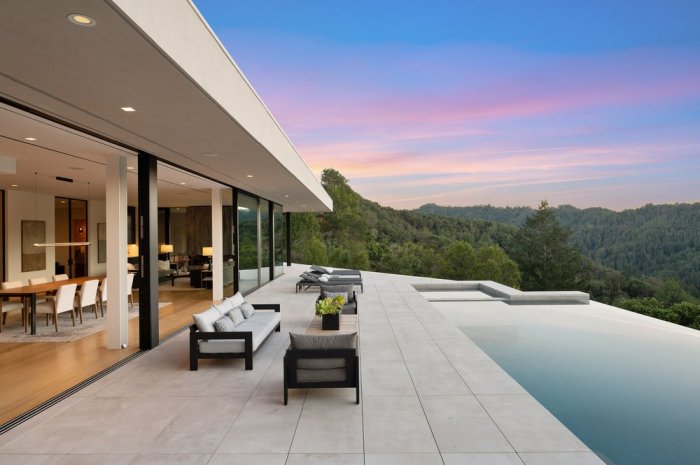
Indoor-Outdoor Connection: Modern homes in the landscape should have a seamless transition between indoor and outdoor spaces. Large windows, sliding glass doors, and outdoor living areas can help to connect the interior with the surrounding nature.
Natural Materials: Incorporate natural and locally sourced materials to complement the landscape and create a sense of harmony. Materials like stone, wood, and glass work well in modern designs.
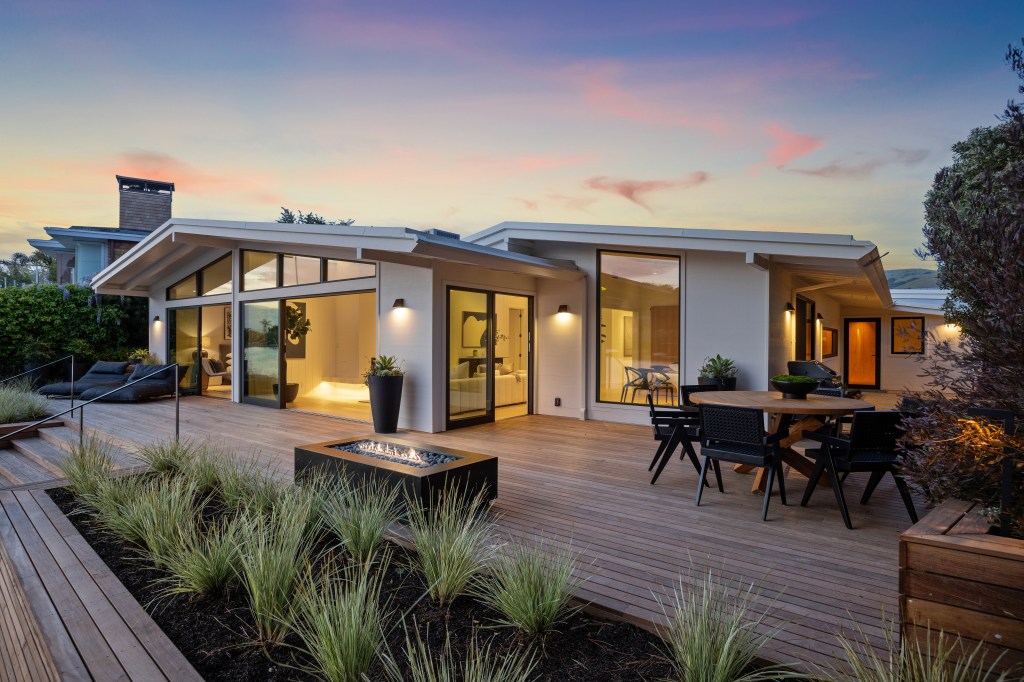
When lit at night, the accents of wood and black framed windows create a backdrop for family and friends to gather at this home. Roof deck above for outdoor living and views.
Minimalist Aesthetics: Embrace the clean lines and minimalist aesthetics often associated with modern architecture. Avoid clutter and unnecessary elements that could detract from the landscape’s beauty.
Roof Design: Consider a green roof or a roof terrace to blend the home into the natural surroundings further. Green roofs can help with insulation and stormwater management while providing additional green space.
Outdoor Landscaping: Use landscaping elements strategically to enhance the overall design. Native plants and low-maintenance landscaping will help the home blend in with the surroundings while attracting local wildlife.
Open Floor Plans: Opt for open floor plans to create a sense of spaciousness and facilitate the flow between indoor and outdoor areas. This openness can also maximize views of the surrounding landscape.
We incorporate large windows and glass walls throughout the homes to maximize natural light and provide unobstructed views of the landscape. These transparent elements will blur the boundaries between the interior and exterior spaces.
Sustainability Features: Incorporate sustainable features, such as rainwater harvesting, solar panels, and energy-efficient appliances, to reduce the home’s ecological footprint and make it more self-sufficient
Respect Nature: While designing, ensure that you respect the existing environment and avoid disrupting natural features. Work around mature trees and natural water bodies rather than removing or altering them.
Outdoor Entertainment Areas: If space permits, consider designing outdoor entertainment areas, like a pool, patio, or outdoor kitchen, which can be enjoyed while taking in the beautiful landscape.
Lighting Design: Plan for exterior lighting that highlights the architectural elements of the home while minimizing light pollution and respecting the natural darkness of the surroundings.
 Orla Studios Architects