
Exploring the Serene Waters: A Historical Journey through Belvedere Lagoon
Nestled within the picturesque town of Belvedere, California, lies a hidden gem that has captivated residents and visitors alike for generations – the Belvedere Lagoon. This tranquil body of water, with its serene ambiance and breathtaking views, holds within its depths a rich history that reflects the charm and allure of this waterfront community.
The Coast Miwok Native Americans first inhabited Belvedere and remained there, undisturbed, for thousands of years.
It wasn’t until 1834 that Mexico granted a land grant to a 29 year old Irish immigrant by the name of John Reed. It was the first land grant in Marin County. John Thomas Reed was born in Dublin, Ireland, in 1805 and died in Marin County in 1843. He shipped to South America in 1820 and lived in Acapulco, Mexico, for six years where he learned the language and customs. He arrived in the Bay Area in 1826.
He built the first framed building in Marin and began running the first regular ferry on the San Francisco Bay. After becoming a Mexican citizen, he was granted the lands in the Mill Valley/Corte Madera/Tiburon area by Governor Figueroa, as long as he built a sawmill and provided wood for the presidios in San Francisco. He then named his land Rancho Corte Madera del Presidio.
The Belvedere islands were part of the 8,000-acre Mexican land grant to Reed that spread out from Tiburon Peninsula to Mill Valley.
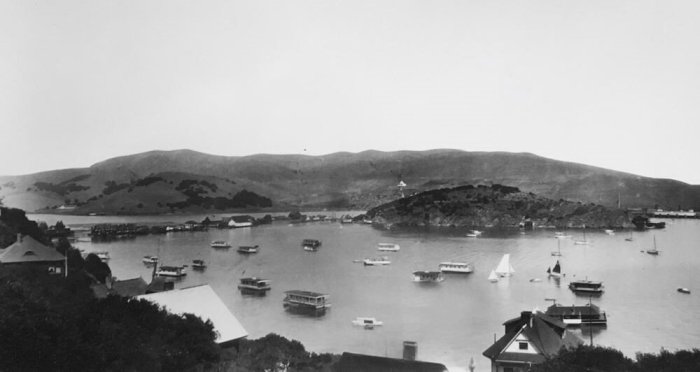
Belvedere, which faces Sausalito across Richardson Bay, was incorporated in 1896 as holiday destination for the affluent in San Francisco. In the late 19th century, arks and sailboats wintered in Belvedere Lagoon. The drawbridge, shown below, would be raised each spring to allow pleasure boats and some arks to go to their Summer moorings outside the tranquil waters of the lagoon.

Origins and Development
After the 1906 earthquake, families moved from San Francisco to their holiday homes or houseboats known as Arks that were docked in the lagoon.
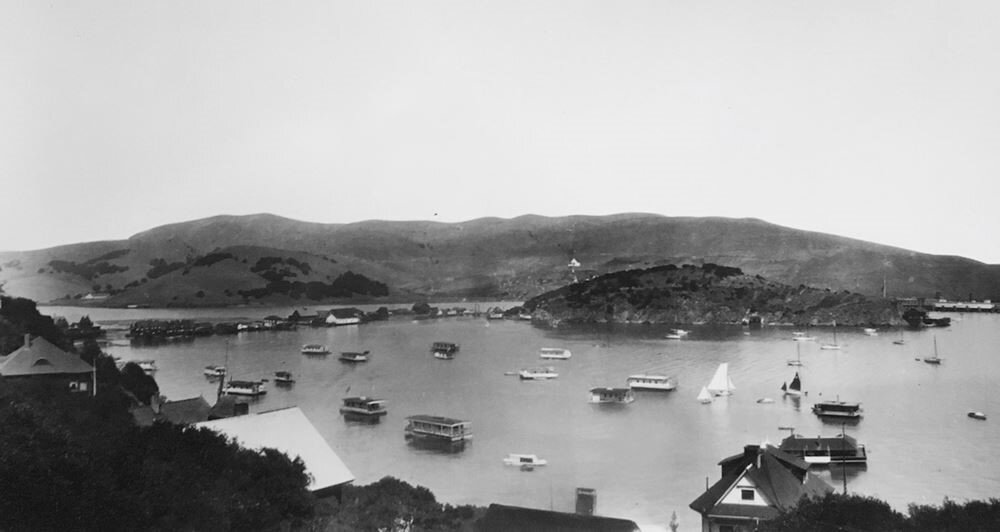

The story of the Belvedere Lagoon begins in the early 20th century when the area was primarily marshland, home to a Cod fishery which burned in 1937.
In the 1930’s, developer Harry B. Allen, founder of the Belvedere Land Company, bought the remaining burned out buildings and envisioned transforming this marshy terrain into an exclusive residential enclave using local Belvedere Architects. Allen’s ambitious plan involved dredging the marshes and creating a man-made lagoon, a feat that would dramatically alter the landscape of Belvedere.

By the late 1930s, Allen’s vision started to materialize as the lagoon began to take shape. The dredging process involved excavating the marshes and connecting them to the Richardson Bay, effectively creating a sheltered inlet that would become the Belvedere Lagoon.
This engineering marvel not only enhanced the natural beauty of the area but also laid the foundation for the development of waterfront properties by Belvedere Architects that would define the character of the area for decades to come. Allen ran a conduit under San Rafael Avenue changing the inlet to the Richardson Bay side.
Using earth from Red Hill in Tiburon, he created new peninsulas of land, almost every parcel had water access. 243 single family homes and 30 rental properties were created. Some were designed by Belvedere Architects employed by the Belvedere Land Company, those lots started at 5,000. Later, by the 1950’s, the lagoon lots were sold for 50,000. New owners hired renowned Belvedere architects like Joe Esherick, Quincy Jones, George Rockrise and Harold Wolfland. They built in a new modern style, now called mid-century modern, with open floor plans. Eager to develop new ideas that married the mass production and technology invented during the first half of the 20th century with a more optimistic outlook for the future, they created architectural gems with the following characteristics essential to the lagoon lifestyle: clean lines, floor-to-ceiling windows, open floor plans and indoor outdoor living spaces,
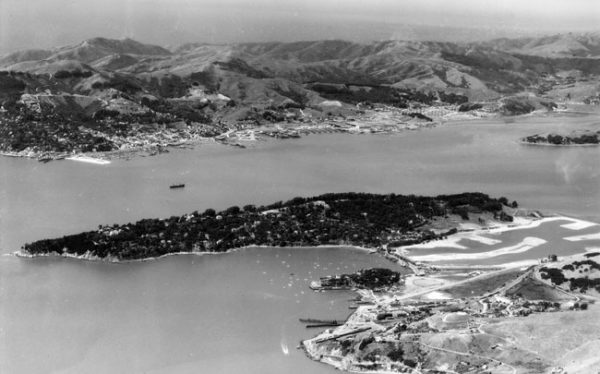

One of the first houses built by Campbell and Wong, a renowned architect, on Peninsula Road, for a Bechtel Engineer, was highlighted in a 1956 House and Garden Edition. The Tiburon hillside visible in the photograph is largely undeveloped.
Images courtesy Randee and Jeffrey Binstock.

INNOVATIVE GROUNDBREAKING ARCHITECTURAL DESIGNS:
The Mid Century Lagoon Residences were an opportunity for talented and inspiring architects to push the boundaries of home design.
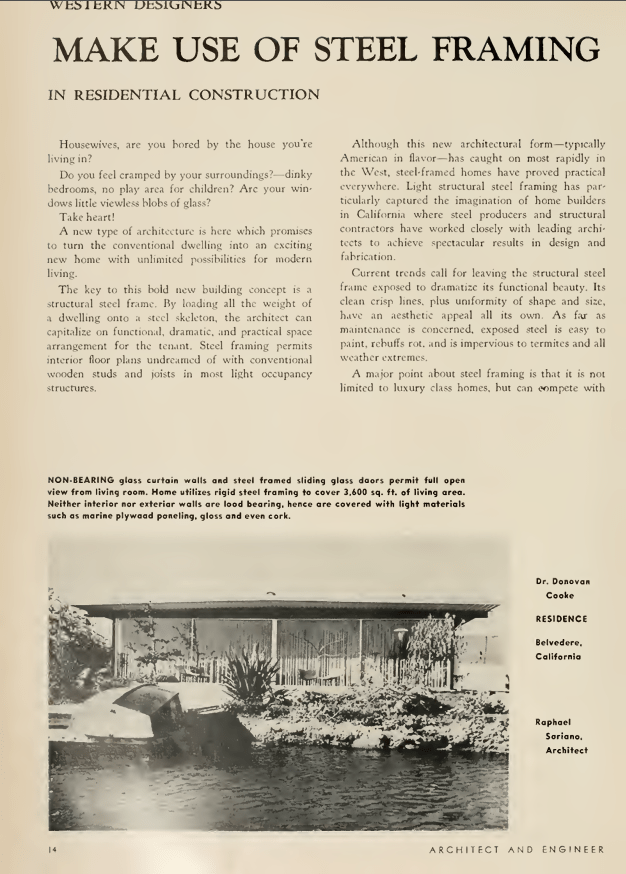
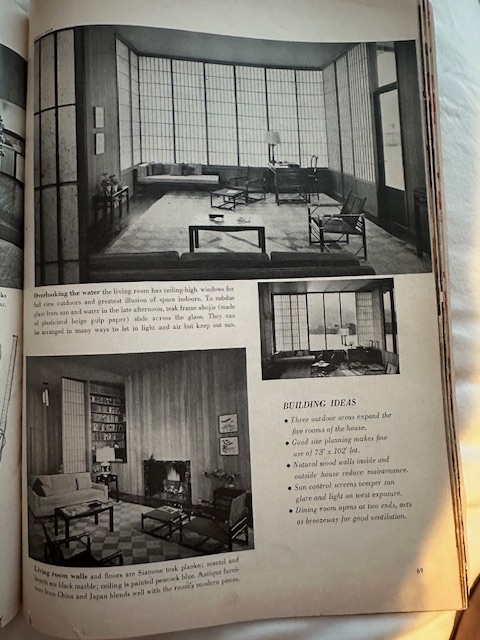
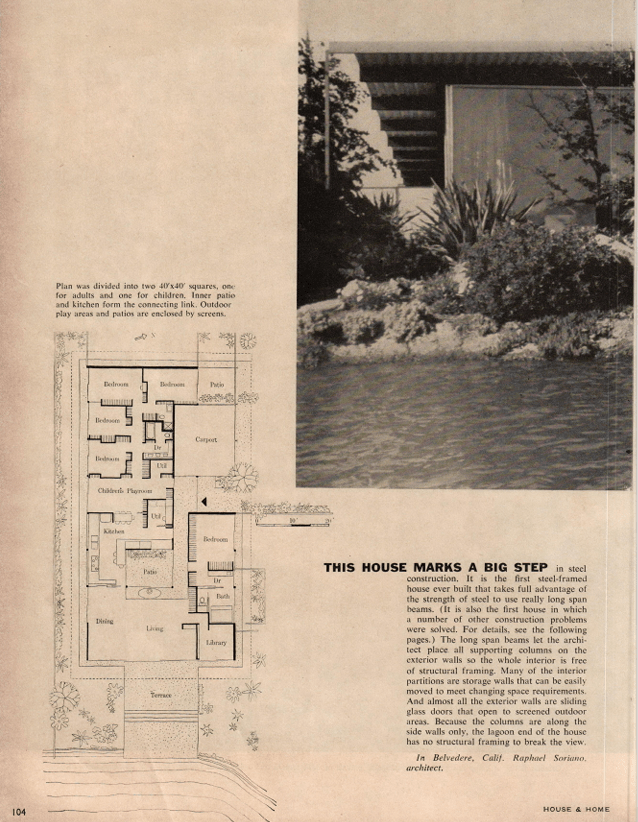
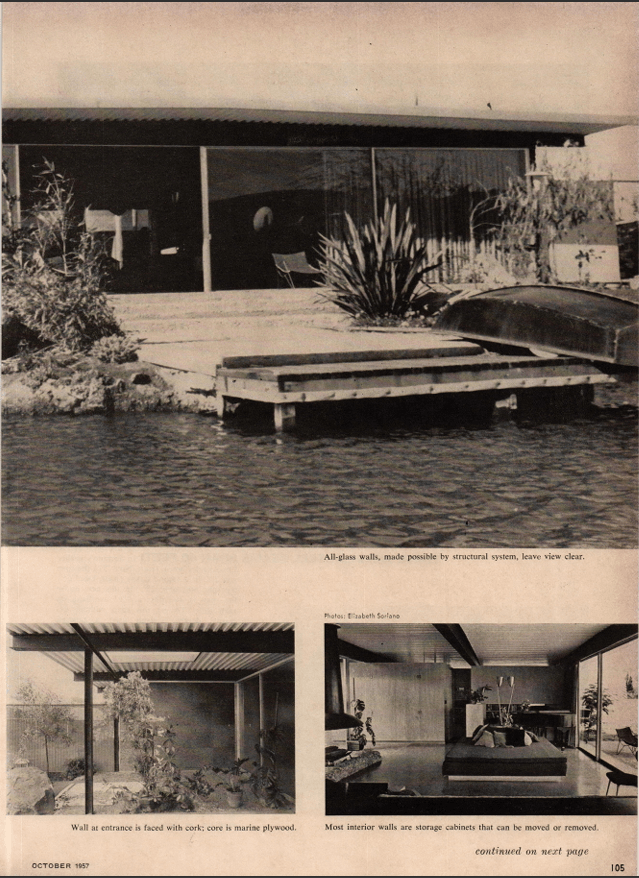
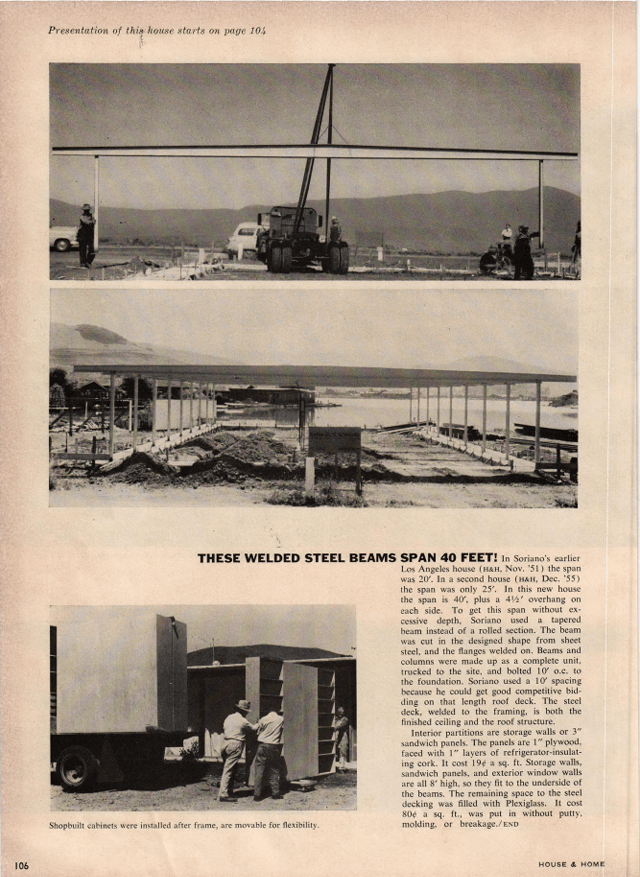
Innovative design was devised for this Belvedere Lagoon home, featured in a 1957 edition of House and Home, and a 1959 Engineer and Architect Edition, by renowned Mid century Belvedere Architect, Raphael Soriano. It was the first to use long span, 40′, tapered steel framing to create large glazed areas and allow the whole interior to be free of structure, allowing all the exterior walls to be sliding glass, no structural framing to break the view to the lagoon.

Throughout the 20th century, the Belvedere Lagoon became synonymous with the Bay Area outdoor lifestyle, attracting affluent residents seeking waterfront living in an idyllic setting. The surrounding properties, ranging from elegant estates to modern residences, were meticulously designed by Belvedere Architects to maximize views of the lagoon and the surrounding landscape, further enhancing the allure of this waterfront community.
The lagoon itself became a playground for sailors and their children, with residents enjoying various water-based activities such as boating, sailing, and kayaking. Its tranquil waters provided a serene escape from the hustle and bustle of city life, offering a sanctuary where residents could unwind and connect with nature.
Preservation and Conservation Efforts
As Belvedere evolved over the years, Belvedere architects built out the remaining lots. The preservation of the lagoon and its surrounding ecosystem became a priority for both residents and local authorities. Recognizing the ecological significance of the area, efforts were undertaken by the Belvedere Lagoon Properties Owners Association to protect the delicate balance of flora and fauna that call the lagoon home.
Today, the Belvedere Lagoon stands as a testament to the successful marriage of human ingenuity and environmental stewardship. Its pristine waters continue to attract visitors from far and wide, drawn by the allure of its natural beauty and the rich history that imbues every corner of this waterfront paradise.
In the heart of Belvedere, amidst the rolling hills and majestic mansions, it stays a tranquil oasis that has stood the test of time. From its humble beginnings as marshland to its transformation into a coveted residential enclave, the lagoon has remained a symbol of luxury, elegance, and natural beauty.
While a lot of the original architecture has been renovated and replaced by new construction, Belvedere Architects retain the connection to the water in their innovative new designs.
Reflecting on its storied and interesting past from Miwok Indians to present day, the lagoon properties demonstrate the timeless allure of waterfront living and the enduring appeal of a community shaped by its rich history and boundless potential. The Belvedere Lagoon is not just a body of water; it is a testament to the human spirit and our innate desire to create and preserve beauty in the world around us.
 Orla Studios Architects