Mass timber refers to a category of engineered wood products that are used as structural elements in building construction. Unlike traditional stick framing, which uses dimensional lumber, mass timber utilizes large solid wood panels or beams to create load-bearing structures. It is an innovative and sustainable construction material that offers numerous advantages in terms of strength, fire resistance, and environmental impact.
Here are some commonly used types of mass timber:
- Cross-Laminated Timber (CLT): CLT is made by stacking multiple layers of wood boards or planks in alternating directions and bonding them together with adhesive. The resulting panel has excellent strength and stability in both directions, allowing for structural use as floors, walls, and roofs. CLT panels can be prefabricated off-site and assembled quickly during construction.
- Glue-Laminated Timber (Glulam): Glulam is produced by bonding together individual pieces of lumber using strong adhesives. The resulting beams or columns have enhanced structural performance and can be manufactured in various shapes and sizes to suit different design requirements. Glulam is often used for long-span applications and can provide an aesthetically pleasing exposed wood finish.
- Laminated Veneer Lumber (LVL): LVL is made by bonding thin wood veneers together with adhesives, creating a high-strength composite material. It offers improved structural performance compared to solid lumber and is commonly used for beams, headers, and other load-bearing members.
- Dowel-Laminated Timber (DLT): DLT is similar to CLT but instead of using adhesive, it uses hardwood dowels inserted between the laminations to provide structural integrity. DLT panels are often used for walls, ceilings, and roofs.
Benefits of Mass Timber:
- Sustainability: Wood is a renewable resource, and mass timber products have a lower carbon footprint compared to traditional construction materials like concrete and steel. Mass timber acts as a carbon sink, as the wood stores carbon dioxide throughout its lifespan.
- Strength and Performance: Mass timber products have excellent structural properties, with high strength-to-weight ratios. They can withstand heavy loads and provide stability and resilience in construction.
- Fire Resistance: Mass timber exhibits good fire performance due to its charring properties. When exposed to fire, the outer layer of wood chars and forms an insulating layer, slowing down the spread of fire and maintaining structural integrity.
- Speed and Efficiency: Mass timber components can be prefabricated off-site, allowing for faster and more efficient construction. The precision manufacturing and lightweight nature of these products enable shorter construction schedules.
- Aesthetics and Biophilic Design: The natural warmth and beauty of wood contribute to a pleasant and inviting built environment. Exposed mass timber elements can enhance the aesthetics of a space, providing a connection to nature and promoting biophilic design principles.
- Thermal Performance: Wood has inherent insulating properties, which contribute to better thermal efficiency and reduced energy consumption in buildings.
Mass timber has gained popularity in recent years and has been used in a variety of building types, including residential, commercial, and institutional projects. It offers an eco-friendly, durable, and visually appealing alternative to traditional construction materials, contributing to sustainable and innovative architectural design.

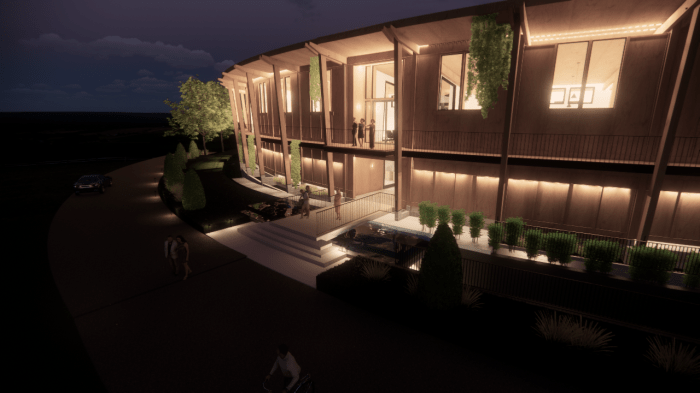
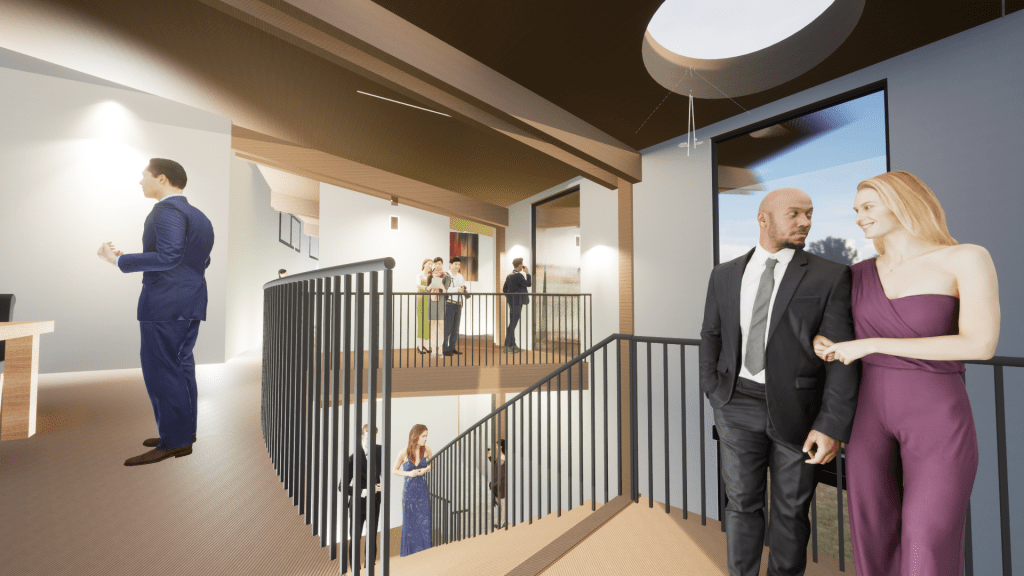
One of our winery projects above with Mass Timber structural elements

 Orla Studios Architects